How Property Crosses Borders At Death
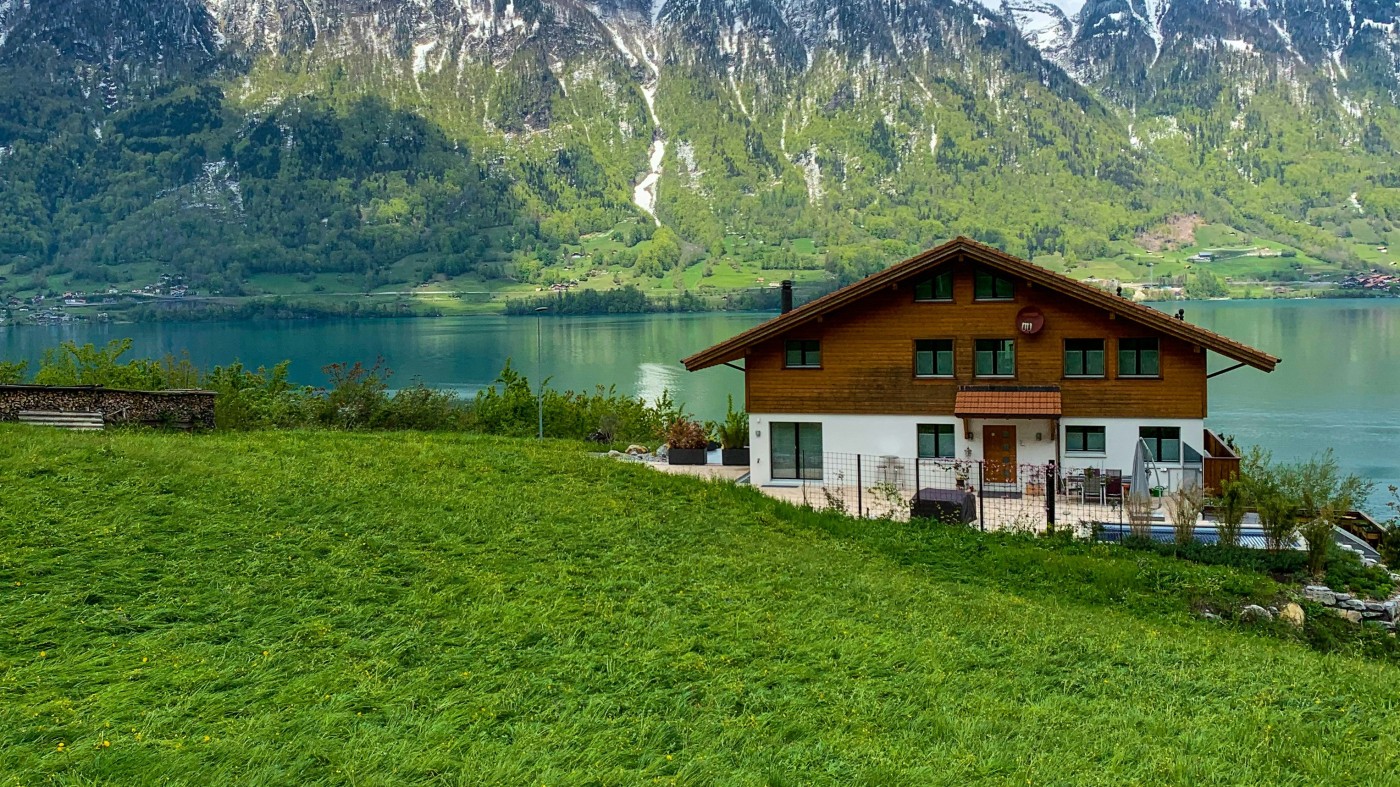
An American thinking about a Zurich apartment, a Vaud chalet, or a Geneva townhouse meets a property system unlike most others in Europe. Whether you can buy at all turns on Lex Koller, the federal law that restricts non-residents from acquiring Swiss real estate. The tax bill turns on which canton the property sits in. And on top of both, the IRS keeps taxing the US-citizen owner on rental income, on capital gains, and on the worldwide estate. Coordination runs through the US-Switzerland income tax treaty (1996, as amended) and the US-Switzerland estate tax treaty (1951).Read together, the rules are workable. Read in isolation, they generate denied permits, surprise wealth-tax bills, and missed foreign tax credits. This article walks through the upstream Lex Koller question, the cantonal tax landscape, and the US overlay.
Lex Koller, Can You Buy at All?
Lex Koller is the federal statute that governs whether a non-resident foreign buyer can acquire Swiss real estate. The starting position is restrictive. A non-Swiss-resident American without a Swiss B (annual residence) or C (permanent residence) permit generally cannot acquire Swiss residential property freely. There are two principal routes through. The first is to obtain a cantonal authorization for a holiday home, available only in designated tourist cantons (Valais, Graubünden, Vaud, Ticino, Bern's Berner Oberland, and others) and subject to an annual federal quota. Permitted properties are typically capped at 200 m² of habitable surface and 1,000 m² of land. The second is to acquire Swiss residency, a B permit holder is treated, for Lex Koller purposes, as a Swiss resident and can buy a primary residence freely (with restrictions on letting and on second homes lifting after the C permit issues, typically after five or ten years of residence depending on nationality). For a US buyer, the upstream Lex Koller question is the threshold issue. Cantonal lawyers handle the authorization application; commitments to purchase before authorization is in place create avoidable contractual and tax risk.
{{INSET-CTA-1}}
Cantonal Tax, Purchase, Ownership, and Sale
Switzerland's federal income tax sits alongside cantonal and communal taxes that vary materially by location. The relevant taxes for a property owner fall into four buckets.
Transfer tax (Handänderungssteuer) is owe don purchase in most cantons, typically 1% to 3.3% of the purchase price, payable by the buyer (sometimes shared). A handful of cantons (Zurich, Schwyz, Uri, Glarus, Aargau, Zug) do not levy a transfer tax and instead charge only registration fees and notary costs. Notary and land registry fees apply on top everywhere, typically 0.2% to 0.5% combined.
Annual property tax (Liegenschaftssteuer or Grundsteuer) applies in around half of Swiss cantons, including Vaud, Geneva, Valais, Bern, and Ticino, at low rates, typically 0.05% to 0.3% of the cantonal tax value of the property. Zurich is one of several cantons that do not levy an annual property tax.
Eigenmietwert, imputed rental value, is the Swiss federal and cantonal concept that an owner-occupied property generates adeemed rental income equal to the canton ally-determined market rent the property could fetch. The deemed income is added to the owner's Swiss taxable income and taxed at marginal rates. Mortgage interest and property maintenance expenses are deductible against it. Eigenmietwert is one of the most often-misunderstood items by foreign owners, it bites whether or not the property is actually let. (Note: parliamentary proposals to abolish Eigenmietwert have been under discussion for years; verify status against current Federal Tax Administration guidance before relying on the position.)
Cantonal real estate gains tax(Grundstückgewinnsteuer) applies on sale at progressive rates that depend on the canton and on the holding period, typically falling sharply the longer the property has been held (by 50% or more after 20 years in many cantons). A short-term sale within five years can attract surcharges of 30% to 50%. The taxis cantonal, not federal, and is owed by the seller. Wealth tax(Vermögenssteuer) is annual, cantonal and communal, on the owner's net worldwide assets for Swiss-resident owners (or on the Swiss-situs portion only for non-resident owners). Property is included at cantonal tax value, mortgages are deductible. Combined cantonal and communal wealth tax rates run in the range of 0.1% to 1% depending on the canton.
The US Tax Overlay, Rental, Sale, and Worldwide Estate
The IRS continues to tax the US-citizen owner of a Swiss property on the same items HMRC and Swiss authorities tax, and on items they do not. Rental income (or Eigenmietwert deemed income, which the IRS does not recognize as income for US purposes) is reported on Schedule E if the property is actually let, with US-style deductions including 27.5-yearstraight-line depreciation. Swiss income tax paid on rental income is creditable against US tax on the same income via Form 1116, in the passive basket. The 1996 US-Swiss income tax treaty coordinates the broader allocation.
On sale, US capital gains rules apply on Schedule D / Form 8949. The §121 primary residence exclusion of $250,000(single) / $500,000 (married filing jointly) is available where the ownership and use tests are met. The Swiss cantonal Grundstückgewinnsteuer on the same gain is creditable on the US side via Form 1116, this is one of the cleaner credit mechanics in cross-border real estate. Currency movements on a Swiss-franc mortgage between purchase and sale are a separate §988 item for US purposes.
On death, the Swiss property is part of the US-citizen owner's worldwide estate against the $15 million per-person OBBBA exemption from January 1, 2026. Switzerland does not levy a federal inheritance tax, the cantons do, with rates and exemptions varying widely (most cantons exempt transfers to spouses and direct descendants entirely; transfers toothers can attract substantial rates, particularly in Vaud, Neuchâtel, and Geneva). The 1951 US-Switzerland estate tax treaty coordinates the result, with credit available on the US side for Swiss inheritance tax paid on the same property.
{{INSET-CTA-2}}
Three Buyer Archetypes, Who Can Buy What, and What the All-in Tax Picture Looks Like
Illustrative summary of three common archetypes for an American buyer in Switzerland. Outcomes depend on the specific canton, the buyer's residency status, and the property type. Verify before relying.
| Archetype | Lex Koller | Cantonal tax (key items) | US tax (key items) |
|---|
| US-resident buyer of a Valais ski chalet (holiday home) | Cantonal authorization required; size and use restrictions; quota applies | Transfer tax + annual property tax; Eigenmietwert; cantonal gains tax on sale | No US tax on purchase; Schedule E if let; §121 not available (not principal residence); FTC for Swiss tax |
| US citizen on Swiss B permit buying a Zurich primary residence | B permit holder treated as resident; primary residence purchase generally permitted | No transfer tax in Zurich; no annual property tax; Eigenmietwert; cantonal gains tax on sale | Schedule E if part-let; §121 available if owned and used as principal residence 24/60 months; Swiss tax creditable via FTC |
| US citizen on Swiss C permit buying a Geneva second home | C permit holder generally treated as Swiss for Lex Koller | Geneva transfer tax + annual property tax + wealth tax; Eigenmietwert; cantonal gains tax on sale | Schedule E if let; §121 not available on second home; Swiss income / gains taxes creditable via FTC |
Questions To Raise With A Qualified Adviser
Five questions a US-citizen buyer of Swiss property should put to a cross-border financial planner and to qualified Swiss and US tax counsel:
- Is the property I'm considering acquirable under Lex Koller for a buyer in my position, and what is the cantonal authorization process and timing?
- In which canton does theproperty sit, and what is the all-in cantonal tax picture, transfer tax, annualproperty tax, Eigenmietwert, gains tax, wealth tax?
- How will Eigenmietwert affectmy Swiss income tax position, and what mortgage interest and maintenancedeductions are available against it?
- How does the 1996 income taxtreaty and Form 1116 coordinate Swiss income tax on rental and gains with my UStax position?
- How does the 1951 US-Swisse state tax treaty interact with my US estate plan and with the cantonal inheritance tax in the canton where the property sits?
Disclosure
This article is for educational and informational purposes only and does not constitute personalized investment, tax, or legal advice. Tax and regulatory rules change frequently and their application depends on individual circumstances. Readers should consult qualified professionals before making any financial decisions. Skybound Wealth USA is an SEC-registered investment adviser; registration does not imply any level of skill or training.